
Understanding Adult Tooth Movement in Chicago, IL
Maintaining a straight, healthy smile is a major priority for professionals and residents living in downtown Chicago, IL. Whether you are delivering a presentation in the Loop or dining along the Magnificent Mile, feeling confident in the alignment of your teeth affects every interaction. However, many adults are surprised to notice that their once-straight teeth are slowly beginning to overlap, twist, or develop unexpected gaps. At Water Tower Dental Care, located inside Water Tower Place, Dr. Daniel Aneszko, Dr. Rana Stino, and Dr. Jennifer Moran specialize in identifying and treating the structural causes of tooth movement. Dr. Aneszko demonstrates an unwavering commitment to clinical excellence by completing over 100 hours of advanced continuing education annually, focusing heavily on complex jaw biomechanics and restorative health.
When you notice that your teeth are gradually changing position, taking prompt action is essential to protect your bite and prevent long-term enamel wear. Tooth shifting is rarely just a cosmetic concern; it often indicates underlying changes in your jawbone density, gum tissue support, or biting forces. When you visit our dentist’s office near you, our priority is to provide a warm, accommodating environment where we can thoroughly evaluate your oral architecture and halt unwanted movement. If you have noticed recent changes in your bite and want to consult our experienced team, please reach out to our office by calling (312) 787-2131 to schedule an evaluation today.
1. Natural Age-Related Mesial Drift and Jaw Bone Changes
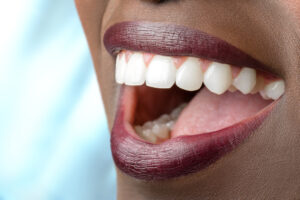 As time passes, your body naturally undergoes subtle physiological transformations, and your mouth is no exception. One of the most prevalent reasons for adult tooth movement is a biological phenomenon known as “mesial drift.” Throughout your life, your teeth have a natural tendency to slowly migrate forward toward the front of your mouth. Over decades, this continuous, microscopic forward pressure causes your front lower teeth to crowd together and overlap.
Additionally, as you age, your lower jawbone naturally shrinks in width and density. This gradual narrowing of the mandible reduces the physical space available for your lower arch, forcing teeth to push against one another. While mesial drift is a completely normal part of aging, severe crowding can make daily oral hygiene difficult, increasing your risk of localized plaque accumulation and decay.
2. Unmanaged Periodontal Disease and Bone Loss
Your teeth are held securely in place by a complex support system consisting of your jawbone, periodontal ligaments, and delicate gum tissue. When plaque and calcified tartar accumulate beneath your gum line, harmful bacteria trigger a chronic inflammatory infection known as periodontal disease. As the infection progresses, it actively destroys the underlying bone tissue and attachment fibers holding your tooth roots stable.
Without a solid bone foundation, your teeth lose their structural anchoring and begin to loosen, tilt, or drift apart under normal chewing pressure. This movement often creates brand-new gaps between teeth or causes front teeth to fan outward.
Common warning signs that gum inflammation is affecting your tooth stability include:
- Red, swollen, or tender gum tissue that bleeds easily during brushing.
- Receding gums that make your teeth appear unusually long.
- A feeling that your teeth are loose or shifting when you bite down.
- Persistent bad breath or a bad taste that will not go away.
If you are experiencing any of these symptoms alongside shifting teeth, our team provides specialized gum disease therapy to eliminate deep bacterial infection and stabilize your foundation. To protect your gums from further bone loss, contact our front desk by calling (312) 787-2131.
3. Subconscious Teeth Grinding and Clenching (Bruxism)
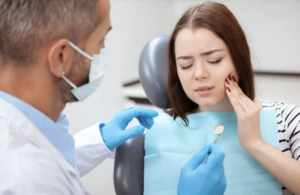 The fast-paced lifestyle of downtown Chicago can frequently lead to subconscious stress and anxiety, which often manifests physically while you sleep. Bruxism—the habit of clenching and grinding your teeth overnight—exerts hundreds of pounds of excessive force on your teeth and jaw joints for hours at a time. This intense pressure can physically push teeth out of their proper alignment over time.
Relentless grinding causes microscopic trauma to the periodontal ligaments, creating temporary mobility that allows teeth to move into unnatural positions. Furthermore, bruxism flattens and wears down the protective biting surfaces of your enamel, altering how your upper and lower arches meet and forcing your jaw to shift into an unnatural bite. To shield your enamel and neutralize heavy biting forces, our practice custom-crafts comfortable nightguards that cushion your teeth overnight.
4. Unreplaced Missing Teeth (Dental Extractions or Tooth Loss)
When you lose a tooth to severe decay, trauma, or an extraction, the balance of your entire dental arch is immediately disrupted. Your teeth rely on their neighbors for lateral support, working together as a continuous, stable arch. When a gap is left unfilled, the teeth on either side of the empty space will naturally tip, tilt, and shift inward toward the open gap.
Simultaneously, the opposing tooth in the opposite arch no longer has a surface to bite against, causing it to gradually erupt further out of its socket—a process known as super-eruption. This chain reaction of shifting can completely throw off your bite alignment and lead to painful jaw joint stress. To prevent adjacent teeth from collapsing into empty spaces, our doctors recommend replacing lost teeth with permanent implant dentistry to maintain arch integrity. If you need to replace a missing tooth and stabilize your bite, reach out by calling (312) 787-2131.
5. Not Wearing an Orthodontic Retainer After Braces 
If you underwent orthodontic treatment in the past, failing to wear your custom retainer as prescribed is a guaranteed recipe for tooth movement. Following braces or clear aligner therapy, the bone and ligament tissues surrounding your newly straightened teeth require several months—and often years—to fully remodel and solidify in their new locations.
Without a retainer holding them in position, the elastic fibers in your gums naturally pull your teeth back toward their original, pre-treatment positions in a process called orthodontic relapse. Fortunately, minor relapse can easily be corrected. Our practice offers comfortable Invisalign® clear aligner therapy to quickly realign shifting teeth without the need for traditional metal brackets.
How Our Chicago Team Can Restore Your Aligned Smile
You do not have to watch your straight smile gradually shift or suffer from the uncomfortable bite issues caused by tooth movement. At Water Tower Dental Care, we combine advanced digital imaging with comprehensive general dentistry and cosmetic dentistry options to diagnose the exact cause of your shifting and restore your facial harmony. Dr. Aneszko, Dr. Stino, and Dr. Moran treat every patient like family, providing personalized care that protects both your health and confidence.
When you visit our modern office inside Water Tower Place, we invite you to completely unwind and enjoy our exclusive Comfort Menu. Relax in our plush memory foam chairs, sip a freshly prepared real fruit smoothie, and watch ceiling-mounted TVs with Bose noise-canceling headphones while our experts carefully analyze your alignment. If you are searching for experienced dentists near you who will help you maintain a straight, healthy, and resilient smile, your search ends right here on North Michigan Avenue. Please submit an appointment request online or contact our office directly by calling (312) 787-2131 to schedule your consultation today.