
Understanding TMD and Neuromuscular Alignment in Chicago, IL
Living a busy lifestyle in downtown Chicago, IL, often means you are constantly on the go, whether you are running to corporate meetings in the Loop or dining with friends along the Magnificent Mile. However, experiencing a sudden, persistent clicking or popping sound in your jaw joint can quickly become a major distraction. At Water Tower Dental Care, located in the prestigious Water Tower Place, Dr. Daniel Aneszko, Dr. Rana Stino, and Dr. Jennifer Moran are deeply committed to identifying the structural and neuromuscular issues behind these annoying joint sounds. When you visit our dentist’s office near you, our top priority is to provide a warm, luxurious, and supportive environment where we can safely diagnose your discomfort and restore your oral harmony.
A clicking jaw is one of the most common warning signs of underlying stress within your temporomandibular joints (TMJ), which connect your lower jawbone to your skull. While a clicking joint might not always cause immediate, severe pain, ignoring it can eventually lead to chronic tension headaches, neck stiffness, or even a jaw that becomes temporarily locked open or closed. If your jaw is making unusual popping noises and you want to discover the true cause of your discomfort, please reach out to our premier dentist’s office in Chicago, IL by calling us at (312) 787-2131 to schedule a personalized evaluation.
1. Temporomandibular Joint Disorder (TMD)
 Temporomandibular joint disorder, commonly referred to as TMD, is the primary clinical cause of a clicking or popping jaw. This condition occurs when the intricate system of muscles, ligaments, and bones that make up your jaw joint becomes inflamed, strained, or structurally misaligned. When the joint is forced to operate outside of its natural path of motion, the physical stress creates friction that manifests as a distinct clicking sound whenever you yawn, chew, or speak.
At our practice, we utilize advanced neuromuscular dentistry to address TMD at its precise source. By carefully analyzing the unique relationship between your jaw joints, facial muscles, and teeth, our doctors can locate the exact position where your jaw functions in perfect, pain-free harmony. This comprehensive approach allows us to create customized therapeutic solutions that stabilize your bite and permanently quiet the clicking joint.
2. A Displaced or Slipped Cartilage Disk
Within each of your jaw joints lies a small, highly flexible cartilage disk that acts as a vital cushion between your lower jawbone and your temporal bone. This disk is designed to slide smoothly back and forth to prevent the hard bones from grinding against each other during normal movement. However, extreme joint pressure or ligament laxity can cause this delicate disk to slip out of its proper position, typically sliding forward in front of the joint.
When you open your mouth to chew or speak, your lower jawbone must forcefully push past the displaced disk, popping it back into its correct position and creating that highly distinct clicking sound. When you close your mouth, the disk slips forward once again, starting the cycle over. This constant internal mechanical popping can wear down the disk over time, making an early professional assessment vital to protect your joint anatomy.
3. Subconscious Nighttime Teeth Grinding (Bruxism)
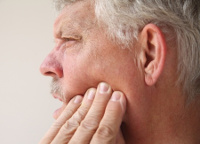 If you find that your jaw is clicking and popping primarily in the morning, the root cause may be a subconscious habit occurring while you sleep. Bruxism, or chronic teeth grinding and clenching, is a highly common reaction to daily stress. This habit exerts hundreds of pounds of continuous mechanical pressure on your teeth, facial muscles, and jaw joints for hours on end, causing severe joint fatigue and inflammation.
Over years of untreated nighttime grinding, this immense pressure damages the cartilage disk and stretches the supportive ligaments surrounding the joint, leading to chronic joint clicking and morning tension headaches. To safeguard your smile and relieve the joint pressure, our team can craft custom-fitted nightguards that perfectly cushion your bite. These professional appliances keep your jaw in a resting position overnight, protecting your enamel and allowing your joints to heal comfortably.
- Temples and Jaw Soreness: Waking up with a dull, heavy ache around your temples or cheek muscles.
- Enamel Damage: Noticing that the chewing surfaces of your teeth look flat, chipped, or unusually worn.
- Limited Range of Motion: Feeling like your jaw is stiff or difficult to open comfortably in the morning.
4. Dental Malocclusion or a Misaligned Bite
Your teeth are designed to meet together in a highly specific, balanced alignment to distribute chewing forces evenly across your entire mouth. When you suffer from a misaligned bite—whether due to crooked teeth, severe crowding, or a history of poorly fitting restorations—your jaw joint is forced to compensate. Every single time you close your mouth to swallow or chew, your muscles must pull your jaw slightly out of its natural alignment just to force your teeth together.
This constant, unnatural muscular pull places a severe, uneven strain on one or both of your jaw joints, rapidly wearing down the protective cartilage disk and triggering joint clicking. For patients looking to correct a misaligned bite and restore their facial balance, our practice offers advanced cosmetic dentistry solutions to build a stable, healthy bite. Realignment therapy successfully takes the pressure off your joints, eliminating the clicking noise and protecting your natural teeth from fracture.
5. Physical Trauma or Joint Arthritis
 A sudden physical injury, such as a sports collision, a slip on an icy sidewalk, or a car accident, can physically damage the ligaments inside your jaw joint or tear the cartilage disk. Even if the initial injury happened years ago, the resulting internal scar tissue and structural changes can cause your jaw to click and pop as you get older.
Additionally, just like your knees or hips, your jaw joints are highly susceptible to developing different forms of arthritis, such as osteoarthritis or rheumatoid arthritis. Arthritis actively breaks down the smooth cartilage lining the joint bones, leading to a situation where the bones rub together painfully, causing a grating or popping sensation. If you are experiencing joint pain and need an experienced dentists near you to evaluate your jaw health, our team is ready to help you find relief.
Reclaim Your Comfort with Neuromuscular Dentistry
You do not have to live with a clicking jaw, chronic facial tension, or the fear of your jaw locking during a meal. At Water Tower Dental Care, we combine advanced digital diagnostics with an Compromiseless standard of luxury to ensure your restorative treatment is entirely comfortable, safe, and effective. Dr. Aneszko’s dedication to clinical excellence—evidenced by completing over 100 hours of advanced continuing education annually—guarantees that your TMJ concerns are addressed with the highest level of care.
When you visit our high-tech downtown clinic, we invite you to sit back and relax with our exclusive Comfort Menu. Sink into our premium memory foam chairs, watch your favorite shows on ceiling-mounted TVs with Bose noise-canceling headphones, and enjoy a freshly made real fruit smoothie while our experts restore your jaw to perfect harmony. Stop letting a clicking jaw compromise your daily comfort and quality of life. Please contact our downtown Chicago dental office directly by calling (312) 787-2131 to schedule your comprehensive neuromuscular evaluation today.